Automatic Shrink Wrapping Across Industries: Where It Fits Best
Automatic Shrink Wrapping Across Industries: Where It Fits Best
The same shrink tunnel Machine behaves very differently depending on what passes through it. A food processor cares about seal integrity and hygiene, a pharmaceutical line cares about tamper evidence and batch traceability, an e-commerce fulfilment centre cares about throughput per shift, and a hardware manufacturer cares about puncture resistance on sharp edges. The machine may look identical on the factory floor, but the film, the conveyor speed, the tunnel temperature profile and the downstream handling all shift with the product.
This sector-by-sector view is written for operations managers and production engineers who are comparing options, not for someone who simply wants a definition. If you are weighing an upgrade, the practical question is not whether you need a shrink tunnel, but which configuration of shrink tunnel fits your product, your line speed and your labour model.
What a Shrink Tunnel Actually Does on a Production Line
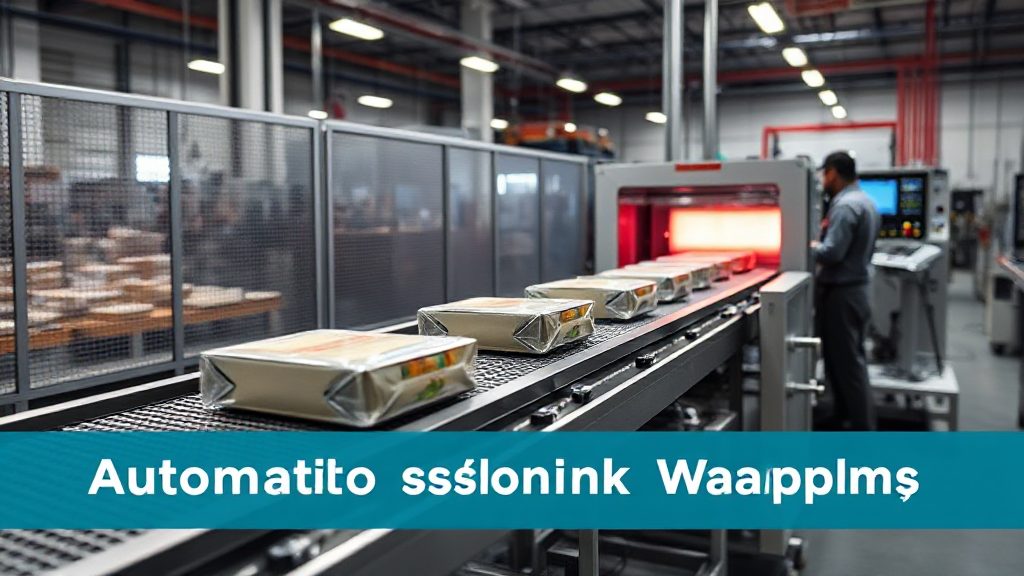
A shrink tunnel is the heated chamber that sits after the wrapping or bagging station. The product is enclosed in a loose sleeve or bag of shrink film, then carried through the tunnel on a mesh or roller conveyor. Controlled heat and airflow cause the film to contract tightly around the product, producing a stable, tamper-evident pack with a clear visual finish.
The tunnel is only one part of the system. A complete line usually includes a wrapping or sealing unit, a conveyor transfer, the tunnel itself, and a cooling or drying section. When buyers talk about a Shrink wrapping machine, they often mean the combined wrap-and-tunnel unit, while a standalone tunnel is used where products are already bagged or sleeved upstream.
Core components that determine performance
- Heating chamber with controlled elements and air circulation fans
- Conveyor in mesh, roller or belt form, matched to product weight and shape
- Temperature and speed controls that let operators tune the shrink profile
- Cooling section or ambient exit zone to set the film before stacking
Most production problems trace back to mismatches in these four areas rather than to the film itself. A tunnel that is correctly sized for the product usually runs with fewer rejects and less operator intervention.
Food and Beverage: Hygiene, Seal Integrity and Shelf Presence
Food producers use shrink tunnels for multi-packs of bottles, canned goods, ready meals, fresh produce trays and bakery items. The tunnel must deliver a tight, consistent wrap that survives chilled or ambient distribution without loosening. Film choice matters here: cross-linked polyethylene and polyolefin films are common where clarity and strength are both required.
Use-case snapshot
A beverage bottler running multi-packs needs a tunnel that can handle a steady stream of heavy packs without film sag. The critical settings are conveyor speed and top-to-bottom airflow, because uneven heat causes one side of the pack to shrink before the other. Stainless-steel construction and easy-clean conveyors are usually specified where washdown or crumb control is part of the hygiene routine.
Common mistakes in food lines include running the tunnel too hot to compensate for a slow conveyor, which can distort labels, and neglecting film perforation on products that release moisture. Both create rework that erodes the labour savings the tunnel was meant to deliver.
Pharmaceutical and Healthcare: Tamper Evidence and Traceability
In pharma and healthcare packaging, the shrink wrap is a security feature as much as a protective one. A tight, uniform wrap around cartons and multi-pack bundles makes tampering visible and supports serialisation workflows. Lines here tend to run at moderate speed but with tight tolerance for appearance and seal consistency.
Use-case snapshot
A contract packer handling cartons of blister packs typically pairs a band sealer or sleeve wrapper with a compact tunnel. The tunnel must avoid excessive heat near printed cartons while still producing a clean shrink. Batch changeovers are frequent, so fast temperature recovery and simple recipe recall on the control panel are more valuable than raw top speed.
The main selection criterion in this sector is repeatability. If the same carton looks different from shift to shift, auditors and quality teams will flag it. Look for tunnels with stable temperature control and a conveyor that keeps packs square as they enter the chamber.
E-commerce and Logistics: Throughput and Mixed Product Profiles
Fulfilment operations face a different problem: product profiles change every hour. One order may be a boxed cosmetic, the next a bundle of cables. Shrink tunnels in this environment are usually paired with automatic wrapping systems so operators can keep pace with dispatch windows.
Use-case snapshot
A regional distribution centre handling small parcels and multi-item bundles benefits from an Automatic Shrink Wrapping machine that wraps and shrinks in one pass. The tunnel is sized for the largest bundle, not the average one, because undersized tunnels force operators to slow the line. Film consumption per pack becomes a visible cost line, so sleeve width and tunnel dimensions should be matched to the actual product mix.
Common mistakes here include buying a tunnel based on peak seasonal speed without checking the conveyor’s ability to handle lightweight items, and ignoring the cooling section so packs stick together on the pallet. Both are avoidable with a short trial on real product samples.
Hardware, Electricals and Industrial Components: Protection on Sharp Edges
Hardware and industrial components present the toughest film challenge. Sharp corners, protruding fasteners and heavy metal parts can puncture standard films, so thicker gauges and heavier-duty tunnels are the norm. The wrap must protect against dust and moisture during transport while keeping the product visible for identification.
Use-case snapshot
A manufacturer of fasteners and small tools may bundle items in trays or on cards before shrinking. The tunnel needs a conveyor that supports the weight without sagging and a heat profile that shrinks film around edges without burning it. Where products are heavy, roller conveyors are often preferred over mesh.
Selection criteria in this sector centre on durability and service access. Tunnels that are easy to open for cleaning and element replacement reduce downtime, and spare-part availability matters more than a marginal speed advantage.
How to Choose Across Sectors: A Practical Comparison
Across all four sectors, the same decision variables recur: product size and weight, required throughput, film type, hygiene requirements, changeover frequency and available floor space. The table below summarises how priorities shift by sector.
| Sector | Priority | Typical tunnel focus |
|---|---|---|
| Food and beverage | Seal integrity and hygiene | Stainless construction, airflow control |
| Pharmaceutical | Repeatability and tamper evidence | Stable temperature, fast changeover |
| E-commerce | Throughput and mixed profiles | Oversized chamber, automatic wrapping |
| Hardware | Puncture resistance and uptime | Heavy-duty conveyor, service access |
Selection checklist
- Run sample products through a tunnel before committing to a size.
- Match film gauge and type to the product’s edges and weight.
- Confirm conveyor speed range covers both current and planned output.
- Check changeover time if you run multiple SKUs per shift.
- Verify local service and spare-part support before purchase.
Buyers in India often find it practical to work with a domestic manufacturer that can support installation and maintenance directly. Amar Packaging, an India-based packaging machinery maker operating since 1998, produces shrink tunnels, sealing machines and vacuum packing equipment for production line upgrades, which makes it easier to align the tunnel with the rest of the packaging line.
Frequently Asked Questions
What is the difference between a shrink tunnel and a shrink wrapping machine?
The wrapping machine applies and seals the film around the product, while the tunnel applies heat to shrink it. Many lines combine both functions in a single automatic unit, but they can also be separate machines connected by a conveyor.
Can one shrink tunnel handle multiple product types?
Yes, within limits. A tunnel sized for the largest product can usually run smaller items, but film width, conveyor speed and temperature settings must be adjusted between runs. Frequent changeovers favour tunnels with simple controls and fast heat recovery.
How do I choose the right film for my tunnel?
Match the film to the product’s weight, edge sharpness and distribution conditions. Polyolefin suits clarity and general use, cross-linked polyethylene suits heavier or sharper products, and PVC is used where a tight, glossy finish is required. Always trial the film in the actual tunnel before committing to a bulk order.
What maintenance does a shrink tunnel need?
Routine checks include cleaning the chamber and conveyor, inspecting heating elements and fans, and verifying temperature calibration. Keeping the tunnel free of film residue and debris is the single most effective way to avoid uneven shrinkage and downtime.