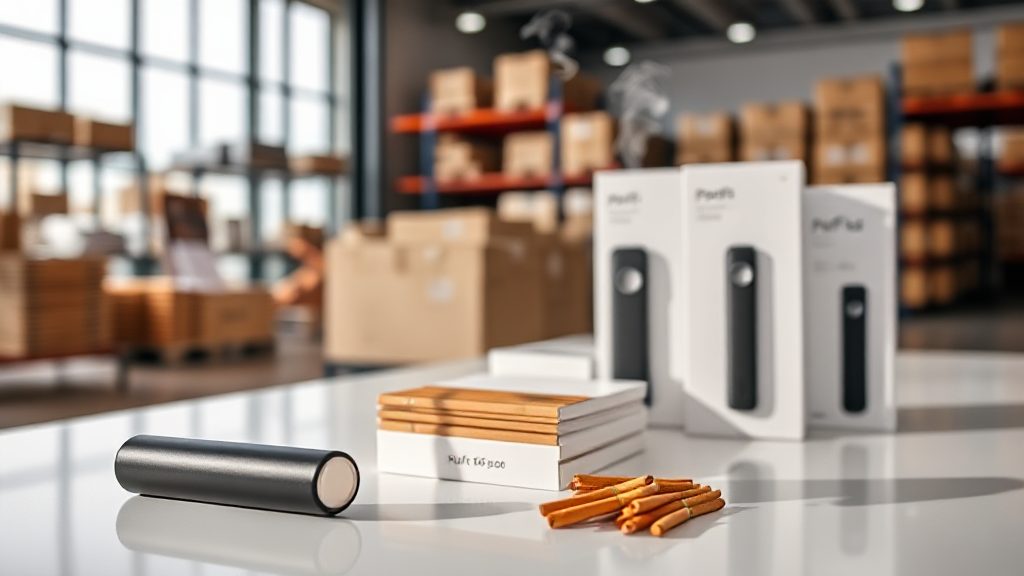
From Warehouse to Doorstep: Heat-Not-Burn Delivery in Europe
From Warehouse to Doorstep: Heat-Not-Burn Delivery in Europe
The tracking notification arrives before the product does, and it tells a story most shoppers never see. Behind that short message sits a chain of picking, packing, customs handling and last-mile routing that determines whether your order arrives in two days or two weeks. If you buy heated tobacco online, understanding that chain is the difference between a smooth reorder and a frustrating wait.
This is a logistics explainer, not a product review. It covers how heat-not-burn orders move through European warehouses, what changes when a parcel crosses a border, and which details are worth checking before you confirm checkout.
Why the Tracking Message Is the Real Starting Point
A tracking link is generated the moment a warehouse scans your parcel, but the clock actually starts earlier. Payment authorisation, stock allocation and age verification all happen before any courier sees the box. When a shop promises fast delivery, the honest question is how quickly those pre-shipment steps clear.
For heat-not-burn products, age checks and payment security add steps that a generic retail order does not have. A well-run shop confirms these at checkout rather than after dispatch, so the parcel is not held at the warehouse gate. That is why the first scan often appears within a day for in-stock items and slips to several days for backorders.
What happens before the first scan
- Order confirmation and payment authorisation
- Age and eligibility verification
- Stock picking and batch allocation
- Packing, labelling and handover to the courier
Each step is short on its own, but together they explain most of the gap between “order placed” and “parcel in transit”.
Inside the Warehouse: Picking, Packing and Product Integrity
Heat-not-burn devices and tobacco sticks are not fragile in the way glass is, but they are sensitive to handling. Sticks need to stay sealed and dry, and devices should ship with their accessories intact. A warehouse that specialises in this category usually keeps sticks in climate-controlled storage and packs them so they do not rattle against a device.
Packaging also matters for discretion. A plain outer box with no readable branding protects the contents and avoids drawing attention in shared buildings. Inside, the parcel should show the device, the sticks and any documentation without excess void fill that raises shipping weight and cost.
Signs of a well-packed order
When the box arrives, check that stick packs are unopened, the device box is sealed and the invoice matches what you ordered. A damaged seal on a stick pack is a reason to contact support before use, not after.
Shipping Within Italy: Speed and Regional Realities
Domestic Italian delivery is usually the fastest leg of the journey. Orders from a warehouse in the north can reach major cities in a day or two, while islands and remote areas take longer. The courier network, not the shop, sets the final pace once the parcel leaves the facility.
For adult smokers in Italy who buy heated tobacco online regularly, the practical advice is to order before the weekend cutoff and keep a small buffer of sticks at home. A Friday afternoon order often sits in the warehouse until Monday, which feels like a delay even when nothing went wrong.
What to expect domestically
Most in-stock Italian orders clear dispatch within one working day and arrive within two to four working days depending on the region. Cash-on-delivery, where offered, adds a verification step at the door and can slow the handover.
Cross-Border EU Delivery: Borders, Carriers and Timelines
Once a parcel crosses into another EU country, the rules change. Free movement within the single market helps, but carriers still hand parcels between national networks, and each handover adds a scan and a day. Cross-border orders typically take three to seven working days.
Country-specific rules on tobacco alternatives also affect what a shop can ship where. A retailer that serves multiple markets has to track those rules, which is why some products appear available in one country and restricted in another. Buyers should confirm local rules before ordering rather than assume an EU-wide standard.
Common cross-border friction points
- Carrier handovers between national postal or courier networks
- Address formats that differ from the shop’s checkout fields
- Local restrictions on certain product types or pack sizes
- Remote-region surcharges or extended routes
A correct address and phone number prevents most cross-border failures, because couriers need to reach you when a handover goes wrong.
Payment Security and Order Confirmation
Secure payment is part of delivery, not separate from it. Card verification, fraud screening and encrypted checkout protect both buyer and seller, but a flagged payment can hold an order for manual review. Shops that process payments quickly tend to dispatch quickly too.
Keep the confirmation email and invoice until the parcel arrives. If a payment is declined or held, contact support early rather than reordering, which can create duplicate charges and duplicate shipments.
An Expectations Table, Described in Prose
Picture a simple table with four columns: destination, dispatch time, transit time and total estimate. For Italy, dispatch is typically one working day, transit two to four days, total three to five. For neighbouring EU countries, dispatch one to two days, transit three to five, total four to seven. For distant EU regions, dispatch one to two days, transit four to seven, total five to nine.
The pattern is consistent: dispatch is controlled by the shop, transit is controlled by the courier, and the total is the sum of both. When an order runs late, check which column slipped before assuming the worst.
Frequently Asked Questions
How long does delivery take when I order heat-not-burn products online?
In-stock Italian orders usually arrive in three to five working days, while cross-border EU orders take four to nine working days depending on distance and carrier handovers.
Why is my tracking number not updating?
Tracking often pauses during carrier handovers or while a parcel waits for a local delivery route. If there is no movement for more than three working days, contact the shop’s support with your order number.
Can I change my delivery address after ordering?
Only before dispatch, and only if the shop can reach the warehouse in time. Once a parcel is scanned into the courier network, address changes usually require a redirect through the carrier.
What should I do if a stick pack arrives damaged?
Photograph the packaging and the damaged pack, then contact support before opening or using the product. Most reputable shops replace damaged goods when the evidence is clear.